The winner of the competition in 1845: The Saxhorn
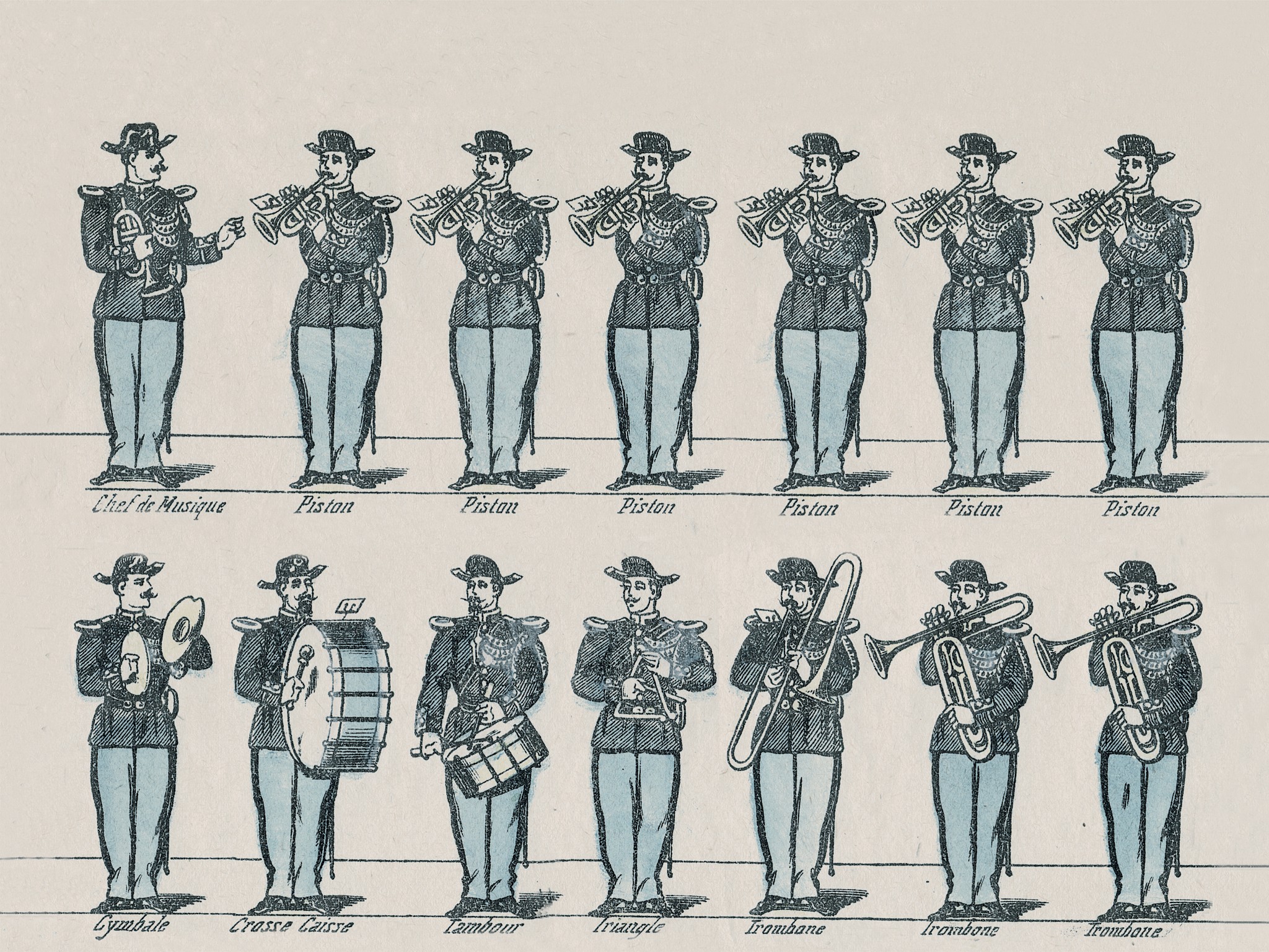
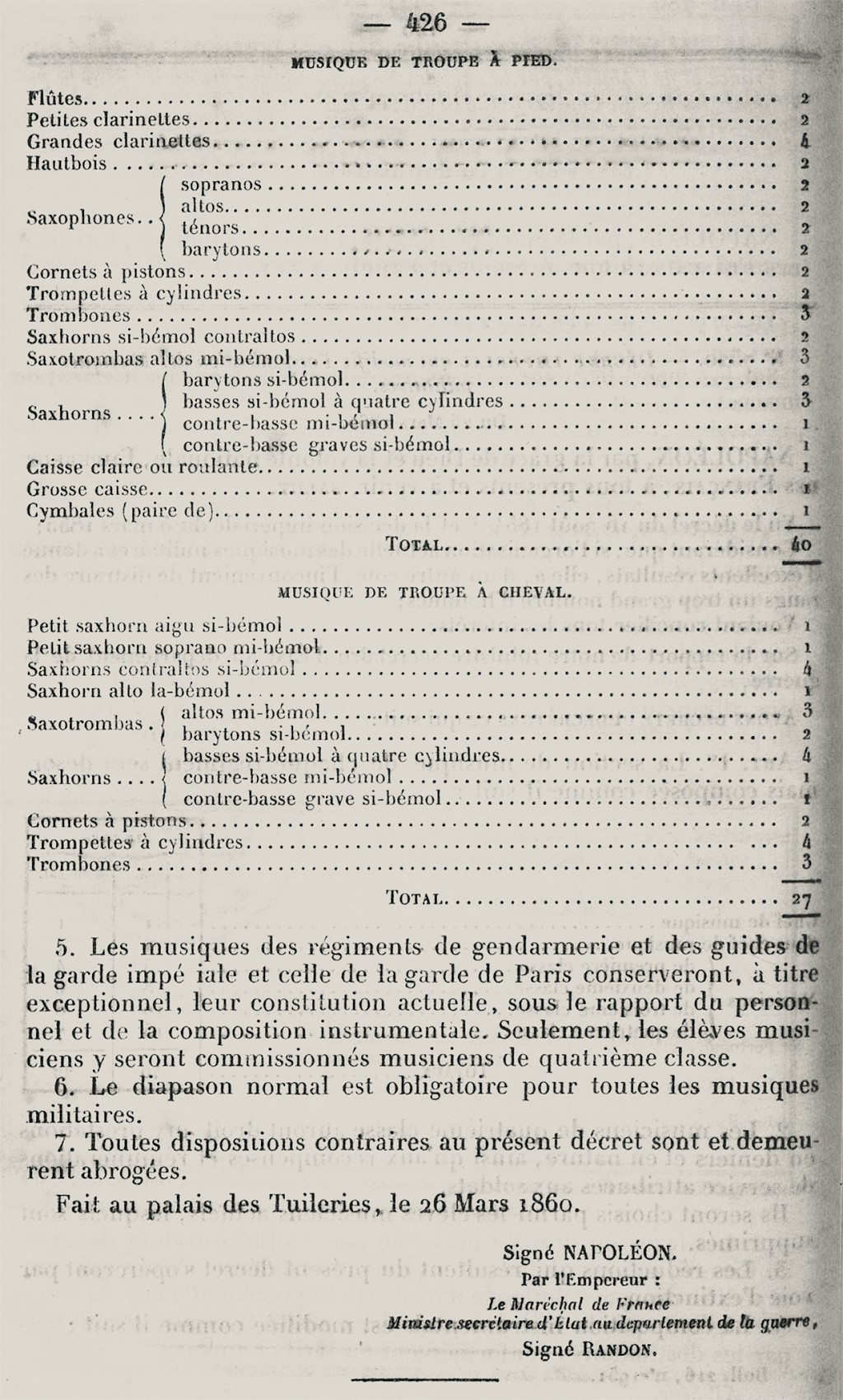
In 1845, a reorganisation of the French military music was organised. An official contest on the champ de mars in Paris should set the new instrumentation. The winner was Adolphe Sax – him again! For the cavalry bands, he had suggested a pure brass instrumentation, based upon his new «saxhorns» – the brass-band was born !
It has developed with only a few changes to the brass-band of today, which is made up of 10 cornets, 1 flugelhorn, 3 alto horns in e-flat, 2 baritone horns in b-flat, 2 euphonium, 3 trombones, 4 tubas and 3 percussion players.
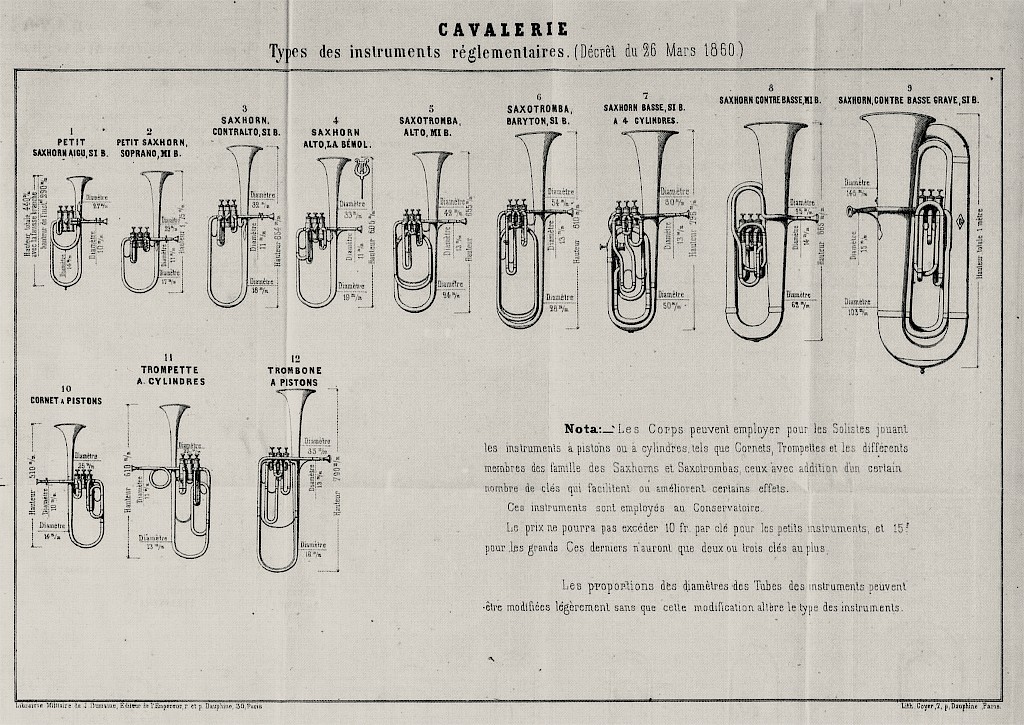
Sax had developed the saxhorns as a family of equally built brass instruments: from the smallest sopranino in high b-flat to the 8 times larger contrebasse in low b-flat. Their bells are mostly directed upwards and all have the three valves in today's order. The «saxhorn basse», a precursor of the euphonium, has an additional valve, lowering the pitch by a fourth.
Therefore, a player can easily change to another saxhorn, also because the notation is transposing, and therefore the fingering stays the same. He only has to adapt to the size of the instrument, particularly of the mouthpiece, and to the amount of air needed.
Saxhorns are the precursor of today’s alto horns in e-flat, baritones and euphonium in b-flat and basses in e-flat and b-flat. Over 150 years, their form barely has changed, only the bore has increased and with it the volume.
Showcase of Sax in 1851
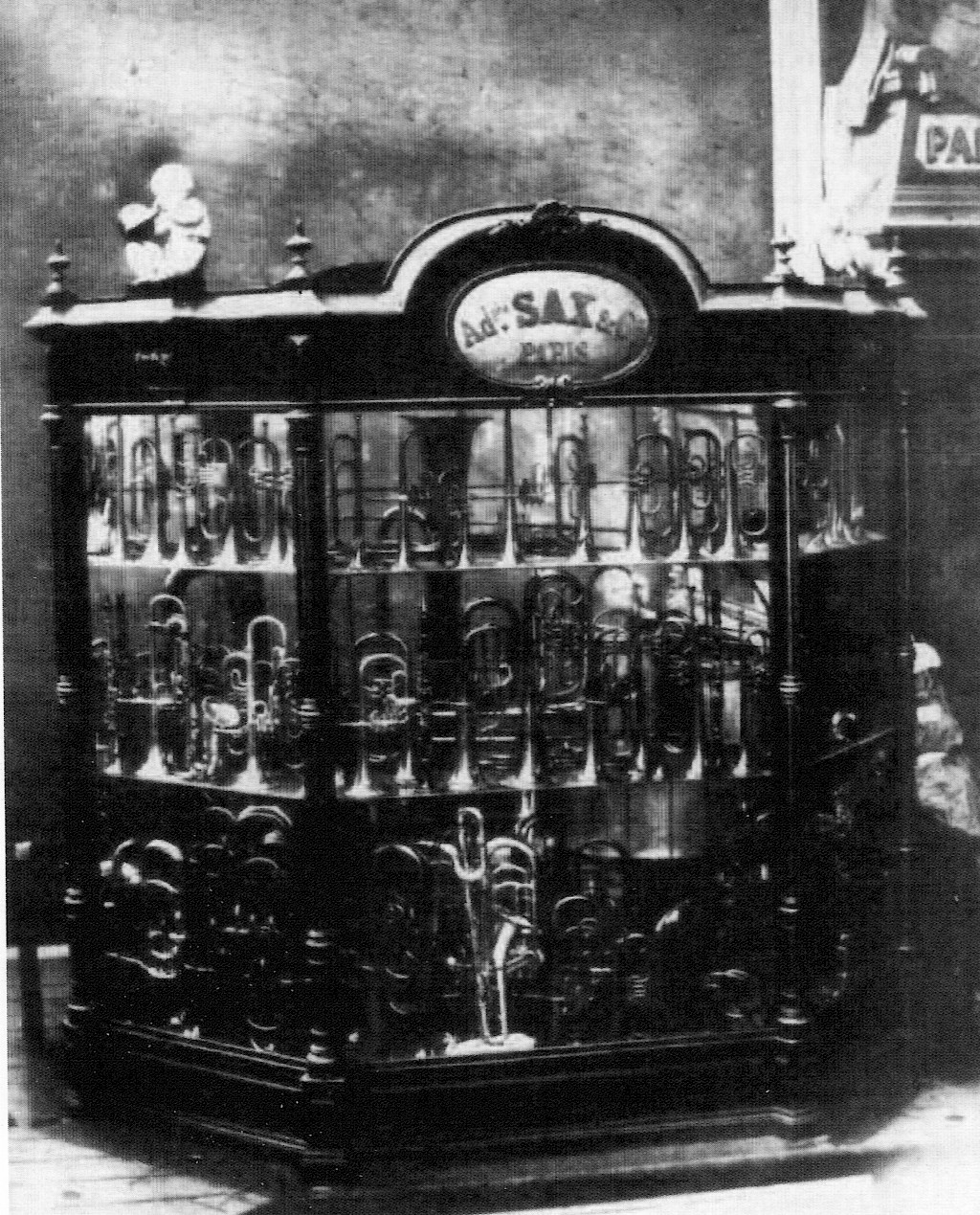
At the 1851 World Exhibition in London, Sax presented his instruments in this showcase. We see mostly brass instruments. Woodwinds are some clarinets at the left and a bass clarinet and two saxophones in the centre.
This is a very early photograph. As such, it does not change the reality while drawings of that time often do.
Sax-omnitonique by Alphonse Sax junior
Alphonse Sax (1822–1874) was the borther of Adolphe Sax. Their father Charles-Joseph also was an instrument maker.
Alphonse developed his 5-valved «Sax-omnitonique» with the aim of fewer valve combinations. This avoids bad sounding notes. The two upper valves raise the pitch by a whole tone and a semitone. The three lower valves lower the pitch by a whole tone, a semitone and a fifth. Alphonse took a French patent for this invention.
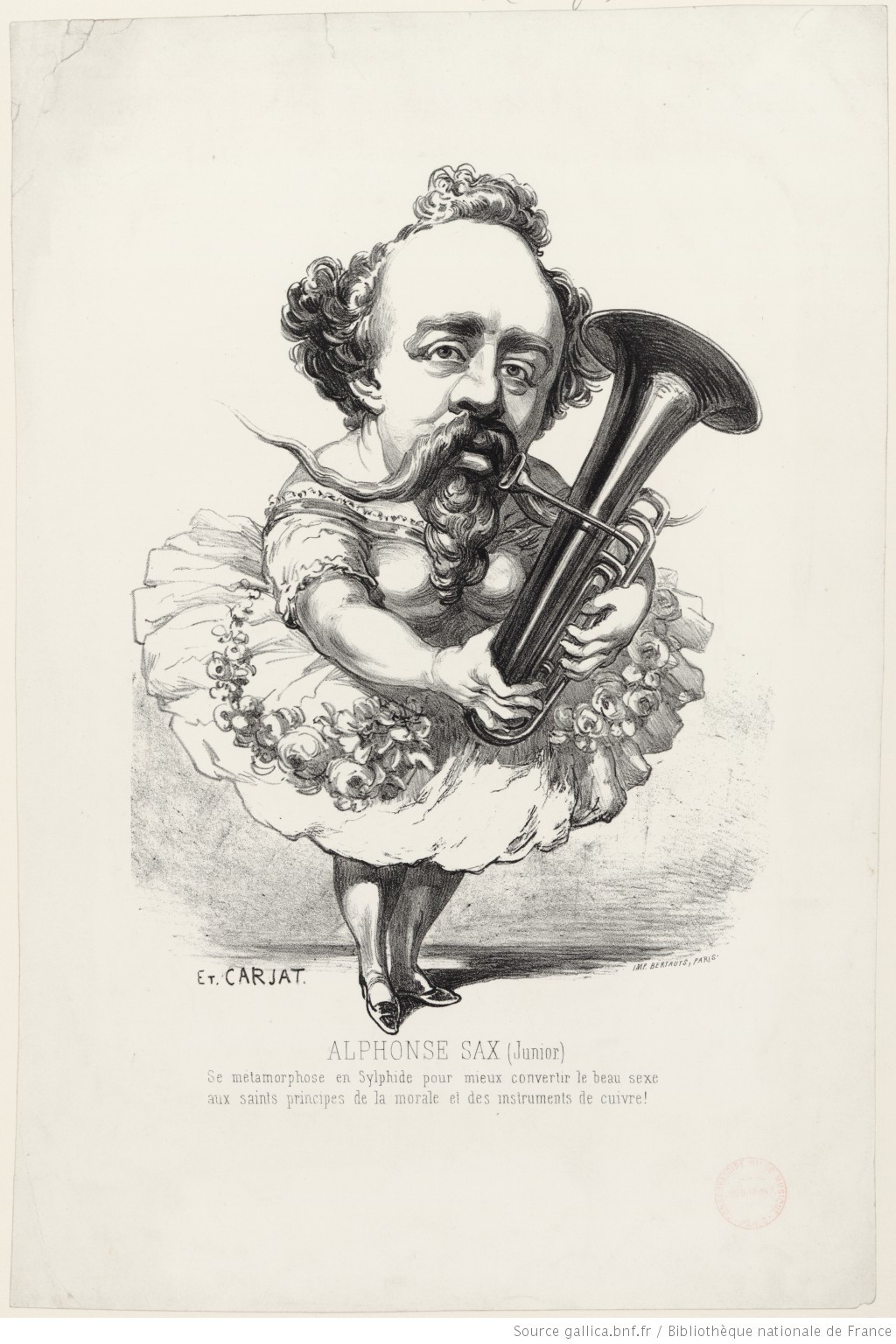
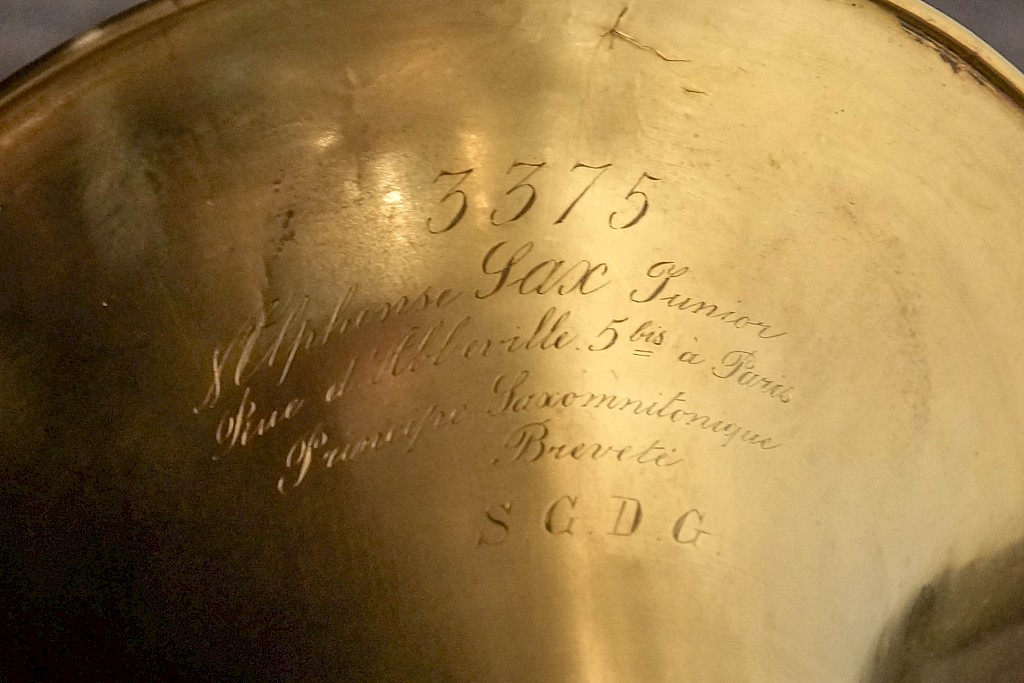
A horn for ladies?
Yes : Alphonse Sax, the brother of Adolphe, developed this Sax-omnitonique explicitly also for women! (more...)