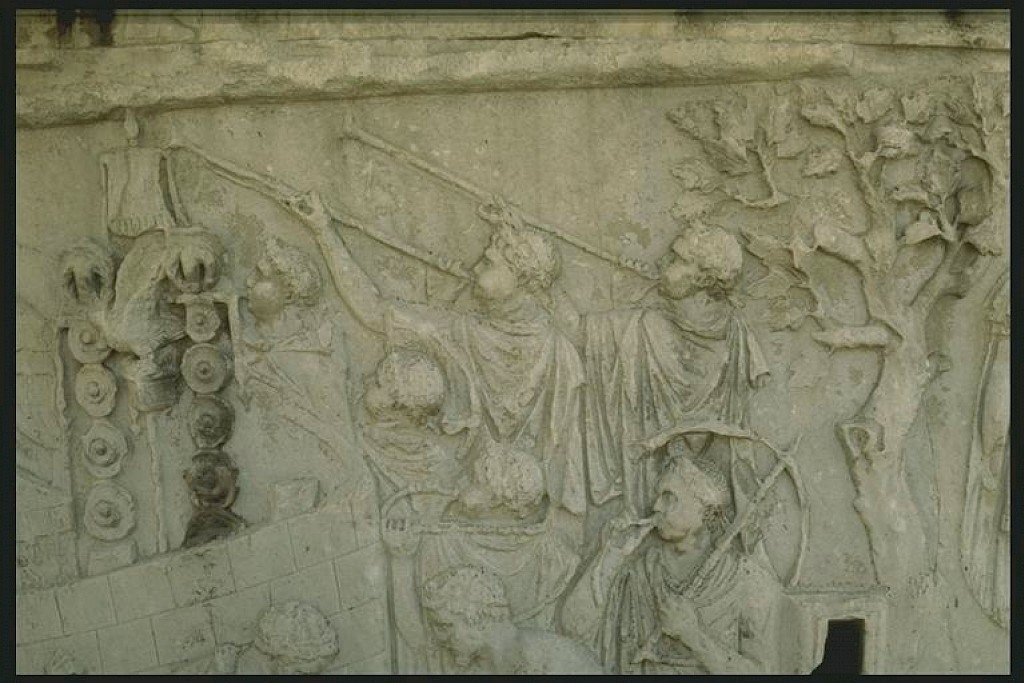
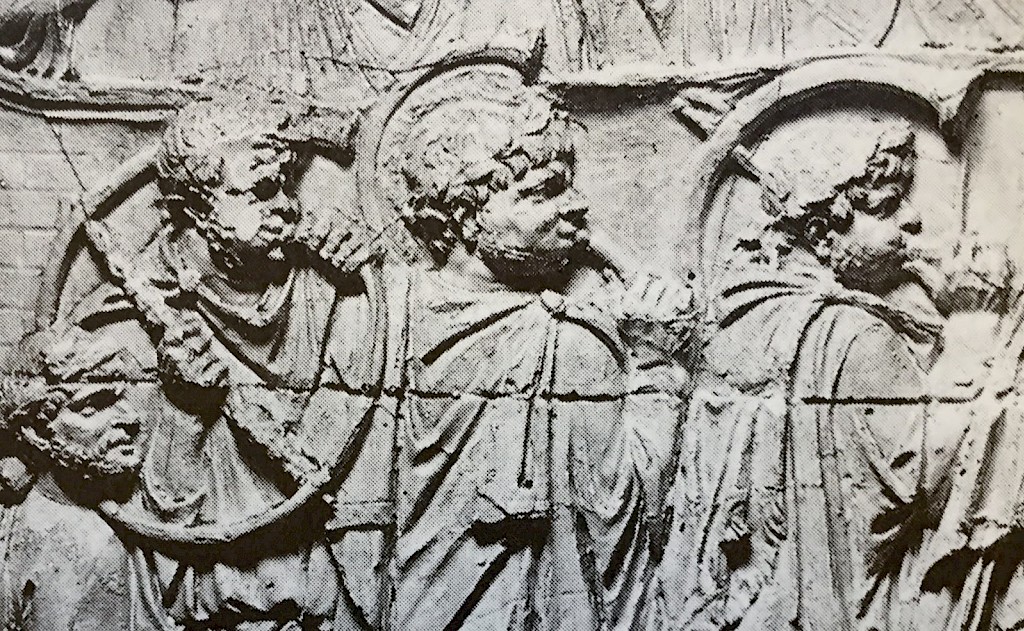
The Trajan column at Forum in Rome was built in the years 112–113. It shows about 2500 persons, among them those players of the bent cornua and the straight tubae.
The Bicycle Band – the other Cavalry Band
The cavalry music plays on horseback, the bicycle band on «steel horseback» (German: «Stahlross»). But how do the musicians at the same time play their instrument and steer the horse or bicycle? – by using instruments, which can be played by one hand only and which do not get in conflict with the head of the horse or the handlebar of the bicycle.
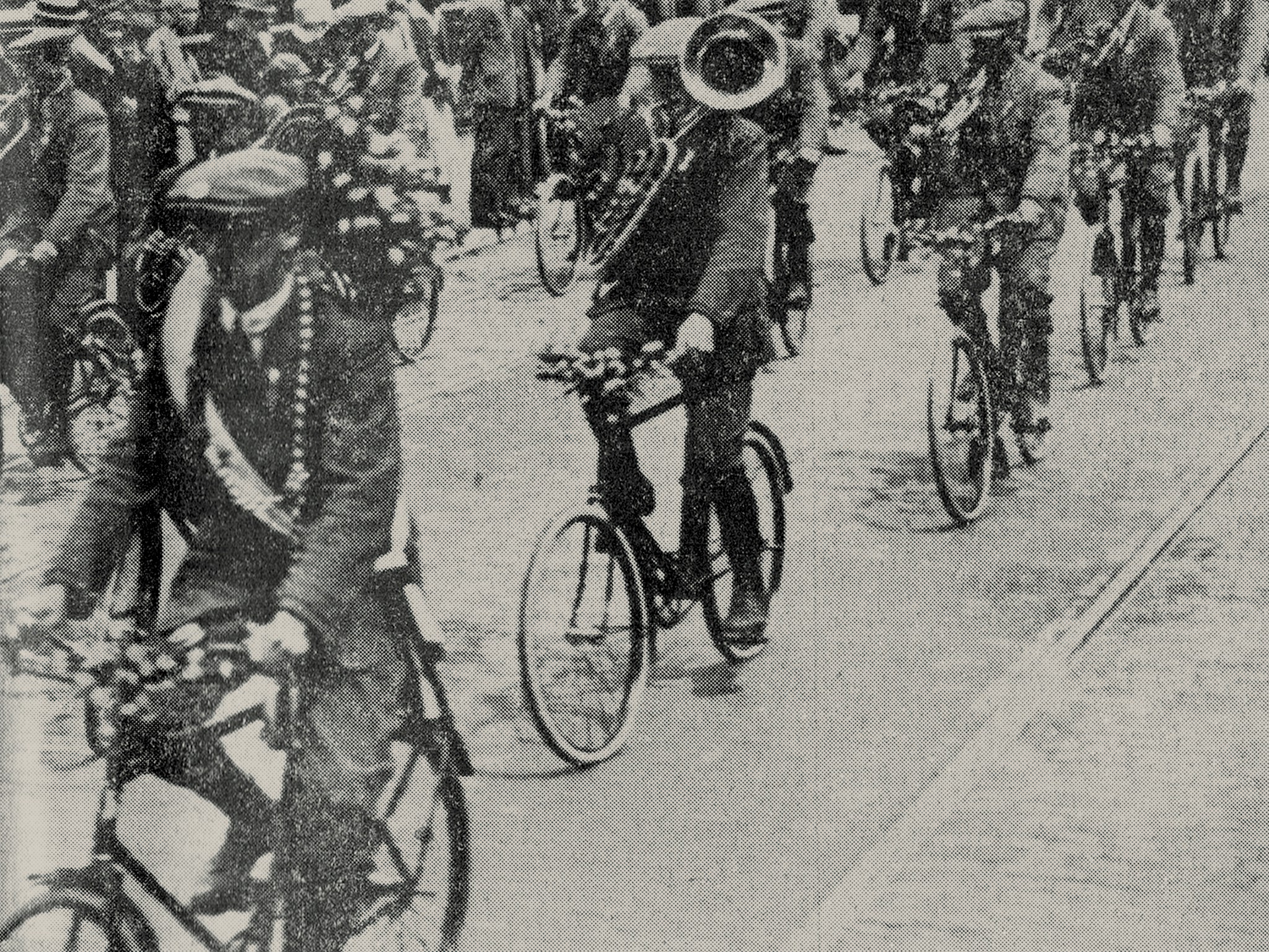
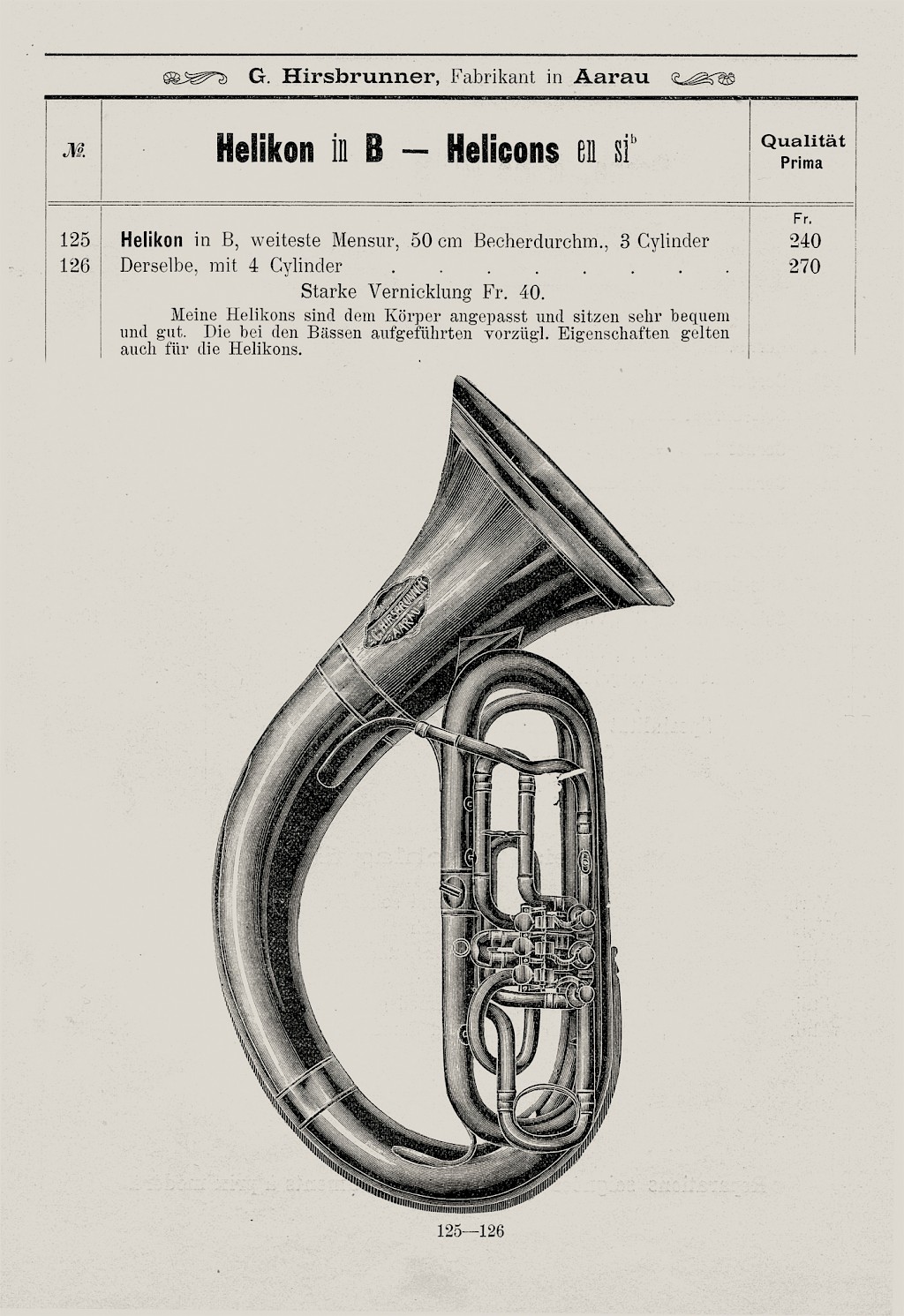
Therefore, all woodwind instruments and the slide trombone do not qualify. Suitable are flugelhorns for the upper range and bass flugelhorns for the middle parts. For the bass part valved trombones, tenor horns and tubas, all in the helicon form. The weight of helicons rests on the left shoulder, the right hand presses the valves. The helicon form was invented in mid-19th century, based on Roman cornua, and got therefore an antique denomination. (more...)
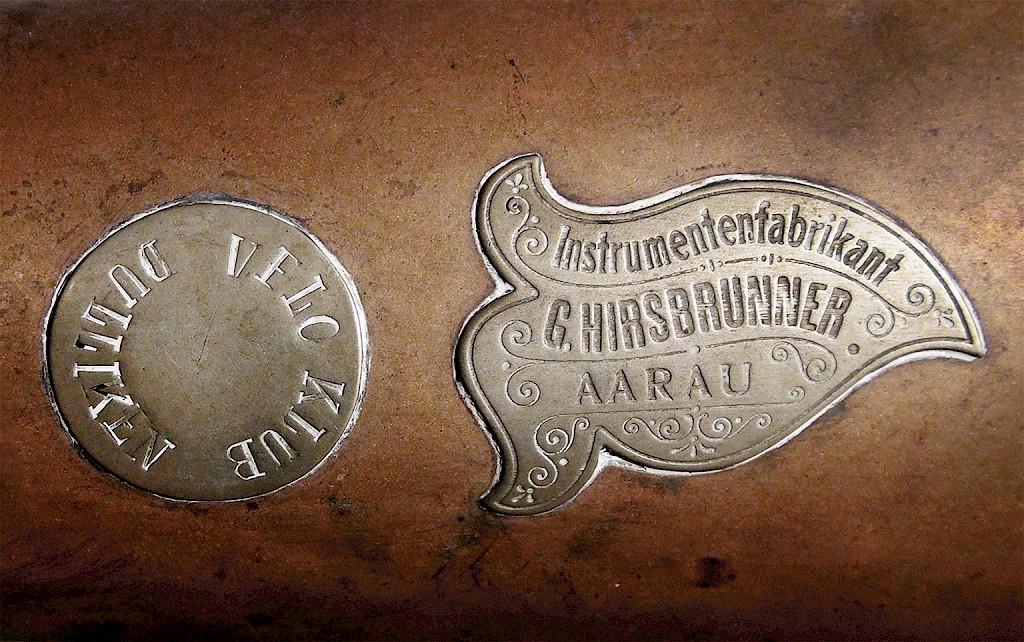
Gottfried Hirsbrunner says in his catalogue of 1904: «My Helicons are adapted to the body and fit very comfortably». He runs a small factory in Aarau and offers not less than 164 models of brass instruments, from the solo cornet to the «Kaisertuba». His father Jakob Hirsbrunner had founded this business in Aarau, while his uncle Friedrich continued to run the larger factory in Sumiswald in the fourth generation.
Illustration: Band of the «Velo-Klub Dulliken» (bicycle club of Dulliken, Kanton of Aargau) playing on the occasion of the «Militärradfahrertag» (Military Bicycle Troup's Day) in 1926, Kornhausbrücke, Bern.
Cornua shown by the the Trajan column in Rome
Drums and timpani require both hands to be played. How should they play, riding a horse or cycling?
The timpani player guides his horse by his feet, the drummer his bicycle by the forearm with the help of a special device!