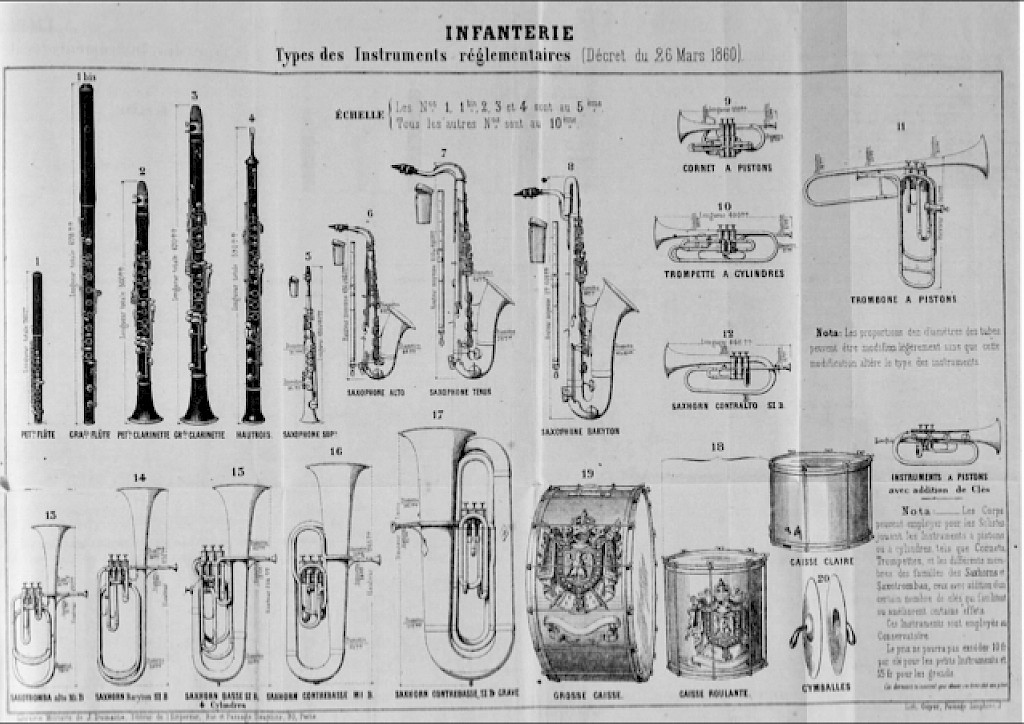
The instrumentation of a French infantry band according to the decree of 1860. Its musical concept is close to today's harmony bands. Woodwinds were piccolos, flutes, oboes, clarinets and also 8 saxophones: 2 each of sopranos, altos, tenors and baritones. Brass instruments were cornets, trumpets, trombones und saxhorns of each size. A set of percussion instruments completed this instrumentation.
A French family with a Belgian father
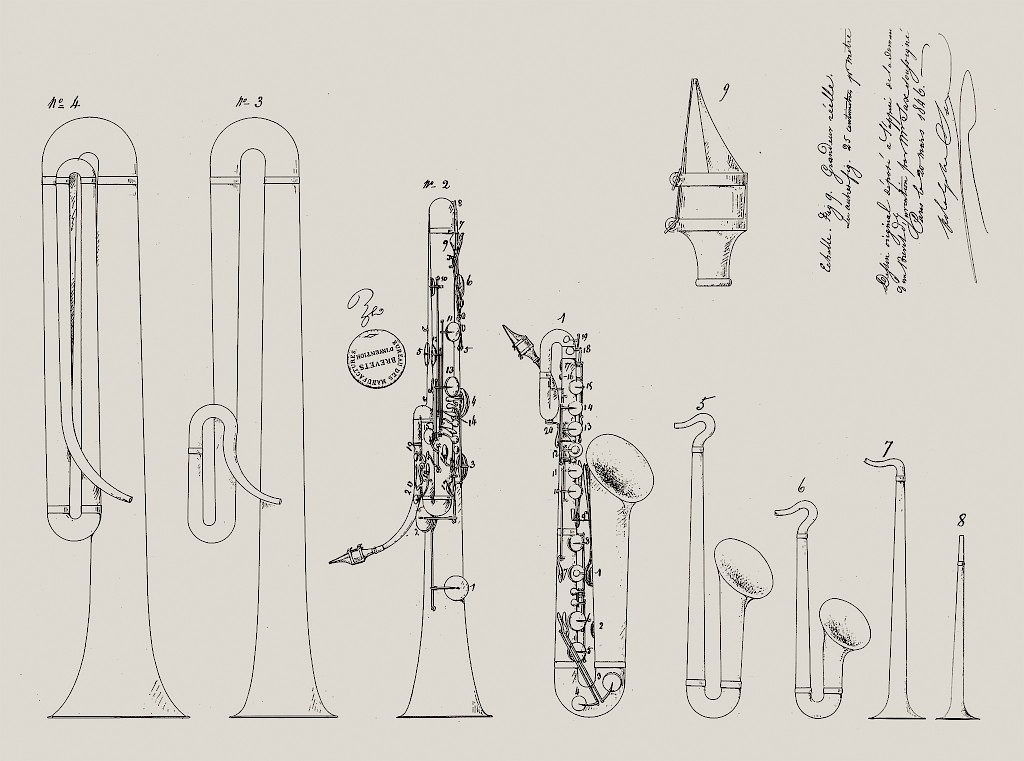
Around 1840, the Belgian instrument maker Adolphe Sax developed a new musical instrument to which he gave his own name, the «Saxophone». He produced it in every size, from the small sopranino to the eight times larger contrabass. «These new voices in the orchestra possess rare and valuable qualities: Sweet and penetrating in the high, mellifluous and plain in the low and very expressive in the middle registers»: that is, how Hector Berlioz described this new family of musical instruments in 1855 («Ces nouvelles voix données à l’orchestre possèdent des qualités rares et précieuses. Douces et pénétrantes dans le haut, pleines, onctueuses dans le grave, leur medium a quelque chose de profondément expressif»
Originally developed for the use in the orchestra or wind band, the saxophone owes the essential popularity of today to its use in Jazz. Many distinguished Jazz musicians from Charlie Parker to Branford Marsalis are saxophonists.
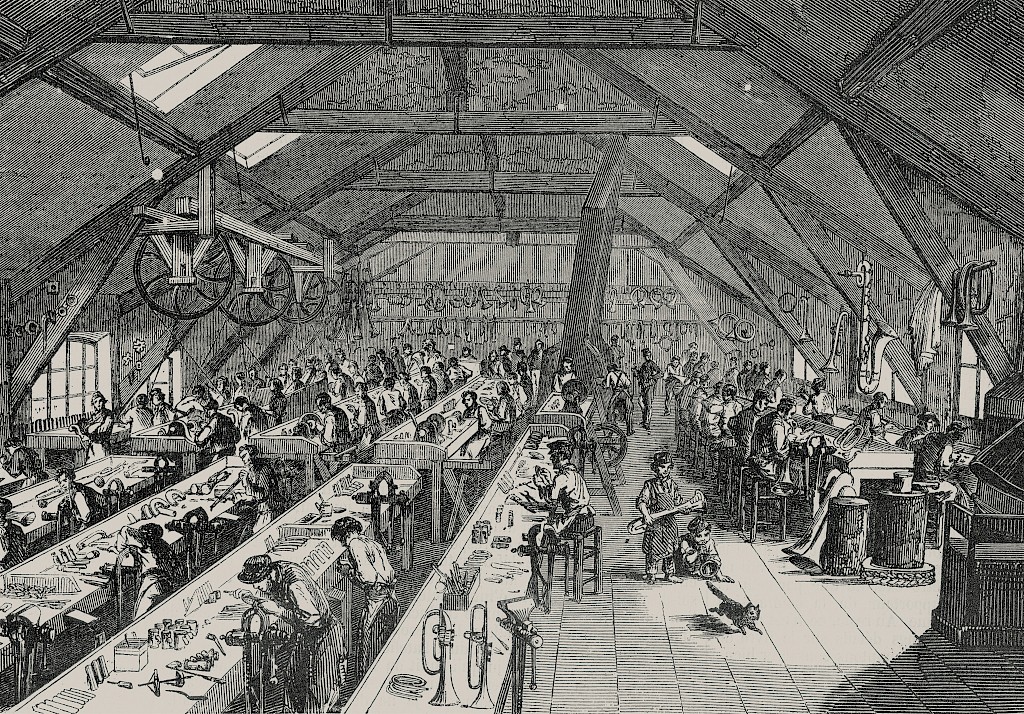
First, Adolphe Sax wanted simply to improve the Ophicleide. He played it using a bass clarinet mouthpiece instead of the brass mouthpiece. His aim was a stronger bass instrument, with stable intonation. This «Ophicléide à bec» was actually the first saxophone.
Then he changed the mechanics of the keys. The valves of the ophicleide are shut and open with the help of the leverages. The keys of the saxophone on the other hand are primarily open, to be shut by the player, as is the case for the woodwind family.
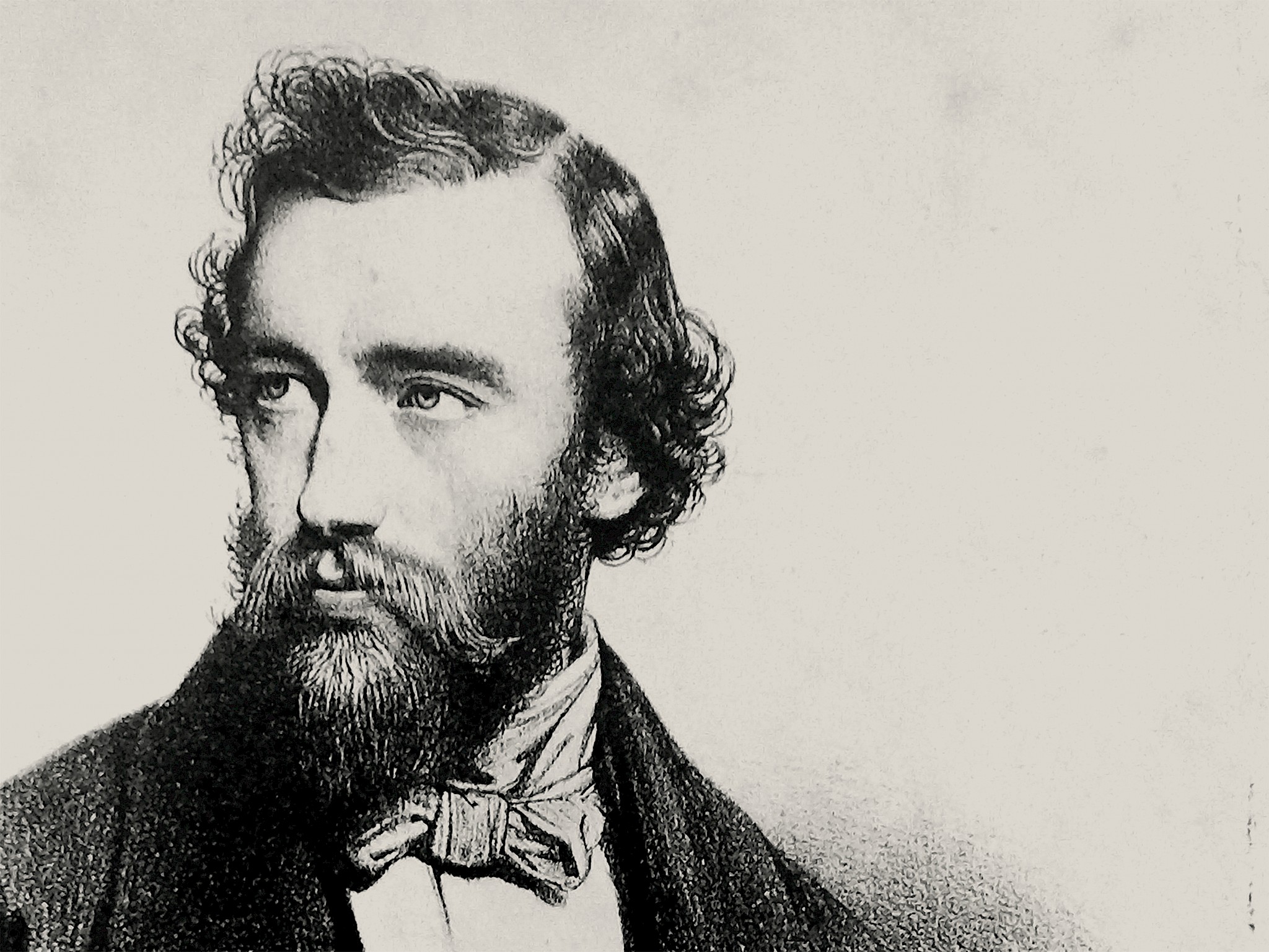
Illustration: Adolphe Sax (born in 1814 in Belgium, dead in 1894 in Paris).
Instrumentation of a wind orchestra
When did «Bird», the Jazz saxophonist Charlie Parker, play on a plastic saxophone?
Rarely – specifically in case, when he had put his metal saxophone in the pawn shop because he was short of money!