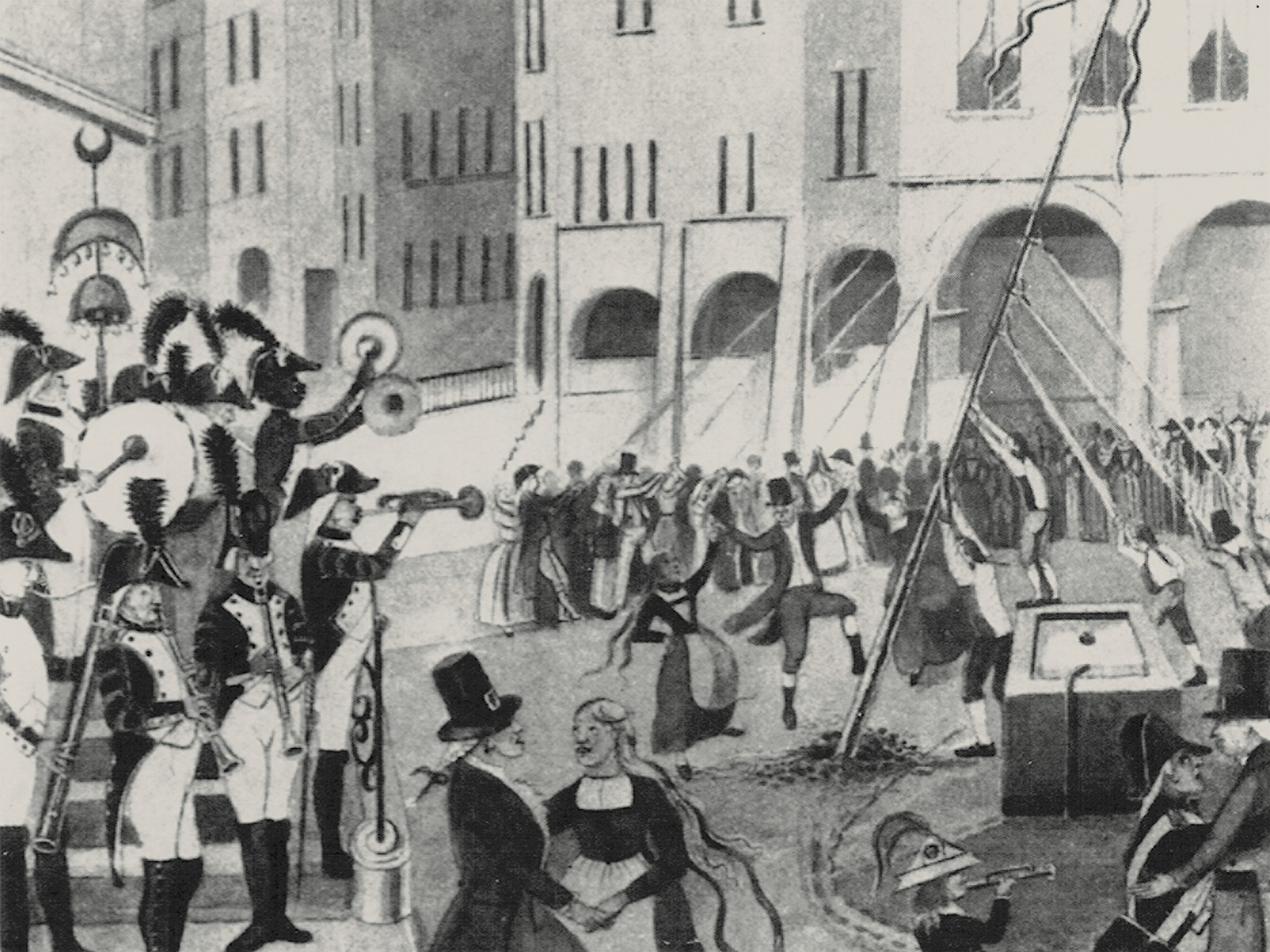
The Instruments of the Janissary music
The oriental culture came into fashion in Europe in the 18th and 19th centuries: clothes, interior decorating and also music. „Janissaries“, Turkish military musicians, came with the Ottoman troops as far as Vienna in 1699. They inspired our music, especially with their varied percussion instruments such as triangle, cymbals and drums.
Mozart included them in his opera «The Abduction from the Seraglio», and in his «alla turca» («Turkish March») for piano, the left hand imitates a drum.
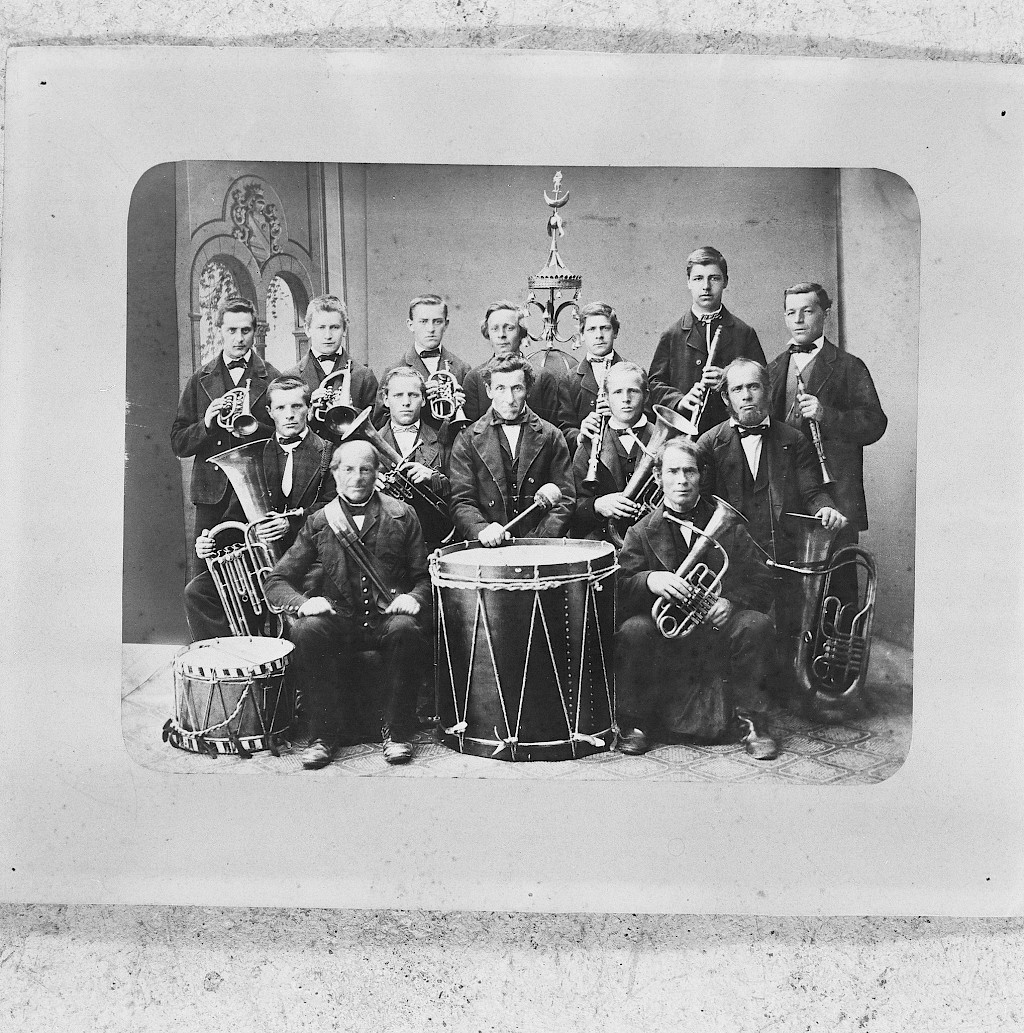
Turkish percussion also found its way into our military bands. The eye-catching Turkish crescent, copied after Ottoman banners, actually produced more background noices than rhythm. The melody was played by oboes, in the 19th century by clarinets, middle register parts by horns and trumpets. Trombone, bassoon and/or the snake-shaped serpent played the bass.
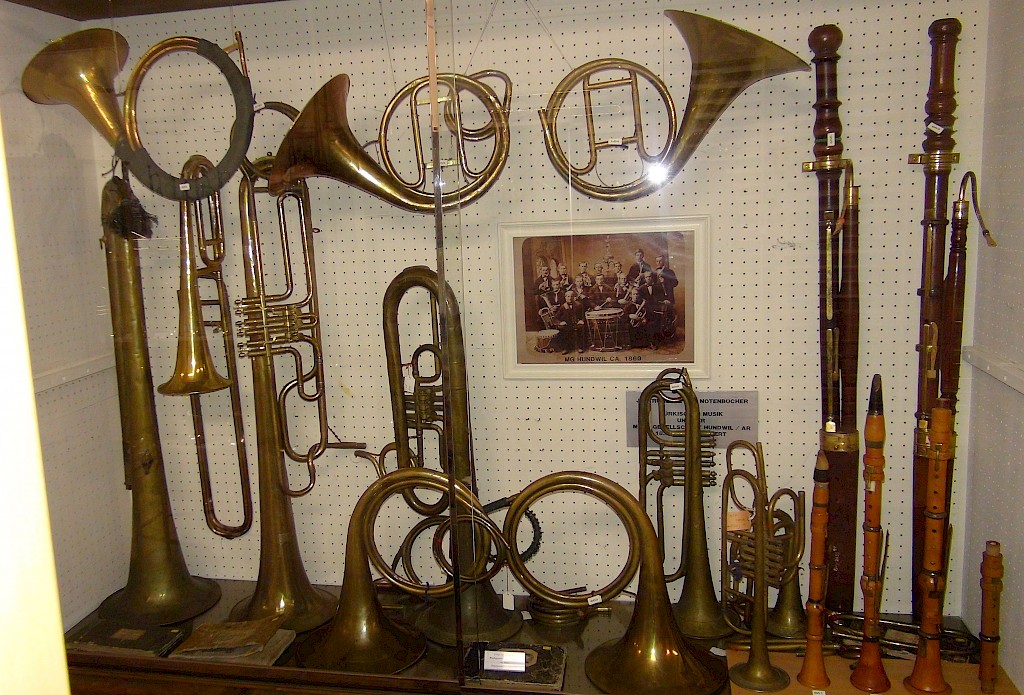
In der Sammlung von Karl Burri sind 17 Instrumente und 49 Notenbücher der «Türkisch-Musik» von Hundwil im Kanton Appenzell Ausserrhoden aus dem 19. Jahrhundert erhalten. Als Ensemble ist dies eine der wichtigsten Quellen zur Schweizer Blasmusik dieser Zeit.
Sie umfasst Klarinetten, hergestellt um 1800 im Appenzell, datierte Hörner aus dem 18. Jahrhundert aus Deutschland, Trompeten und Ophikleiden, sowie insbesondere die zugehörigen Notenbücher. Diese überliefern gegen 500 Musikstücke: Märsche, Walzer, «Hopser», «Feldschritt», Ländler und einige Lieder. (mehr...)
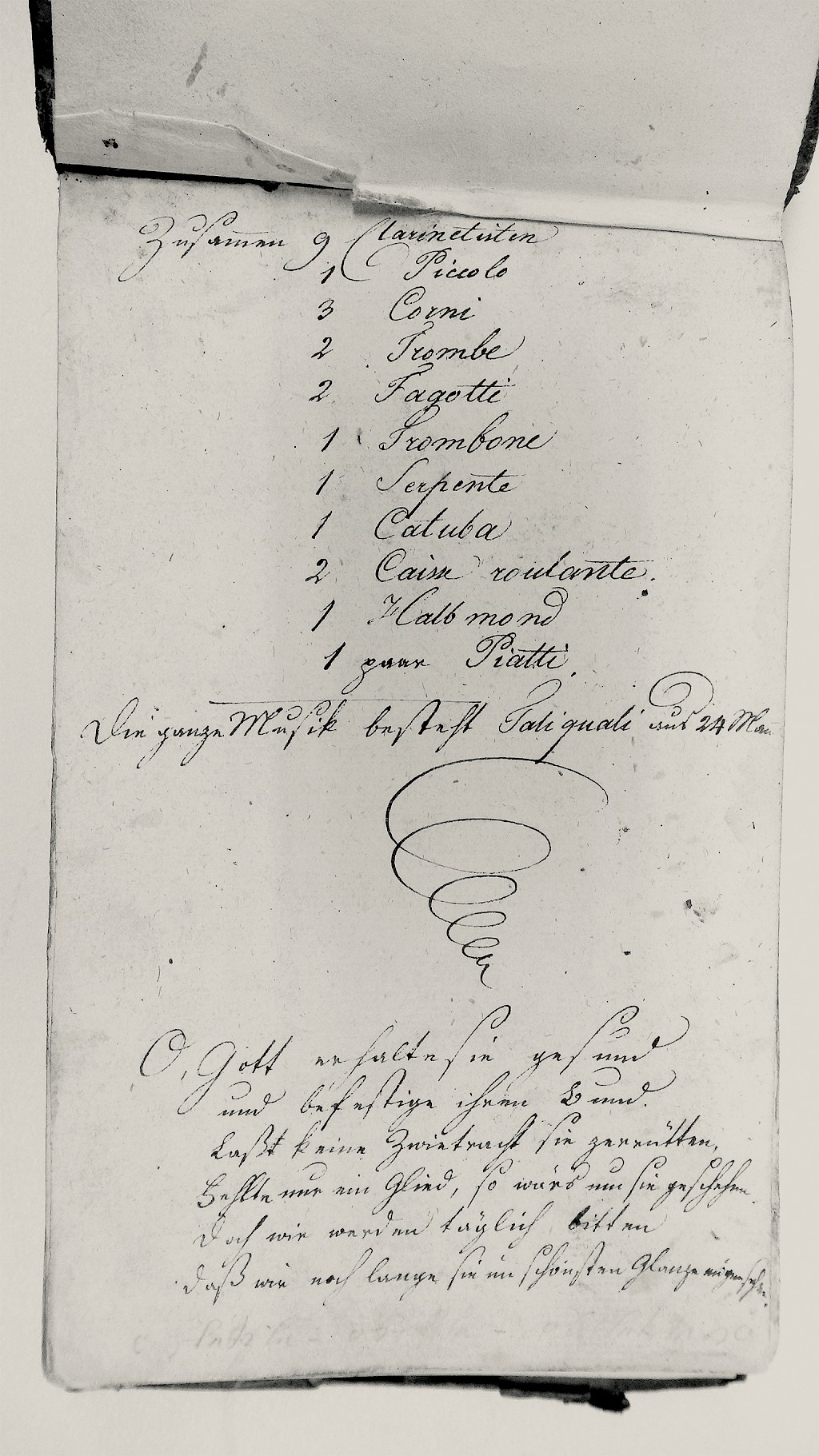
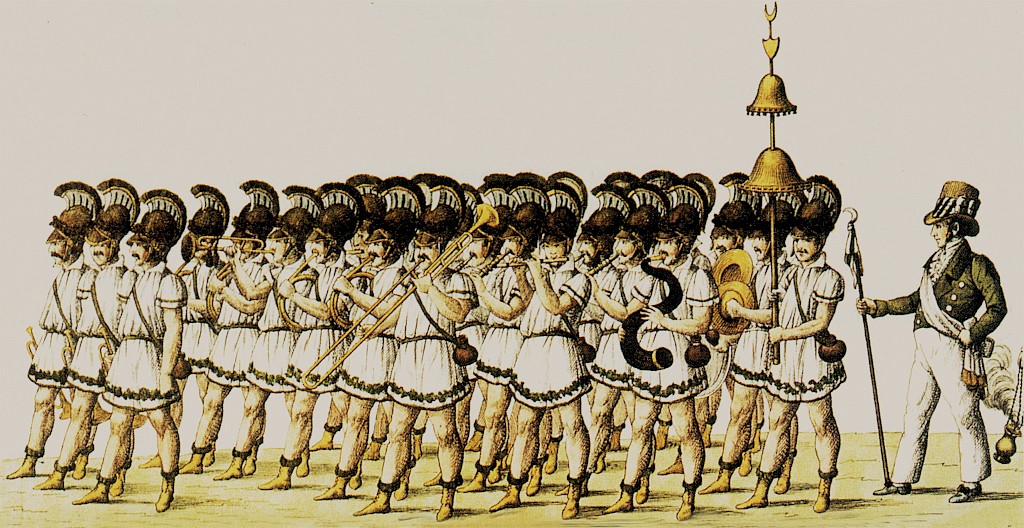
The «Türkisch-Musik» Hundwil, canton of Appenzell Ausserrhoden
Can we imagine the wind bands of the 19th century?
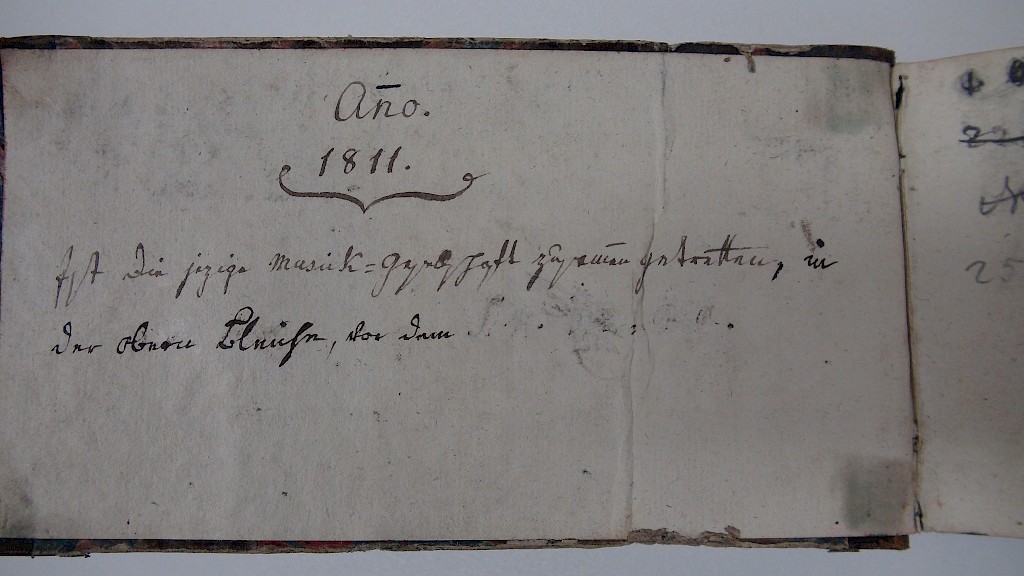
For how it may have been Switzerland, the answer is given by the comprehensive material from Hundwil, located now here in the Burri collection. These 17 instruments and 49 music books with up to 500 pieces shows us a «Turkish band» of the beginning of the 19th century, located at Rohrschach and later on at Hundwil.
The music is written by hand in voluminous books. The players may have played by heart. Lists report us programs played on specific days.
This comprehensive material needs further research – possibly culminating in a reconstruction of such a concert, played on copies of the original instruments.

WHICH ONE OF THESE WORDS DENOMINATE A MUSICAL INSTRUMENT?
1) BELL TREE
2) CRESCENT
3) CHINESE HAT
All of them !
The Turkish crescent is known in German as «Schellenbaum» (bell tree) and in French as «Chapeau chinois» (Chinese hat).